Can you shower, swim or sleep in cremation jewelry? A care guide by material
Take screw-chamber pendants and rings off before showers, swimming and hot tubs, even when they're glued; long soaks and soap can work into the threads. Fused glass and memorial diamonds can get wet safely because the ash is sealed inside. Clean any piece with mild soapy water on a soft cloth, never by soaking.
By the Cremation Jewelry & Memorial Wearables editorial team · Updated September 24, 2026 · 4 min read · Sources
- Water, sleep and exercise, piece by piece
- Gentle cleaning for steel, silver, gold, glass and resin
- What to do if a piece leaks, breaks or is lost
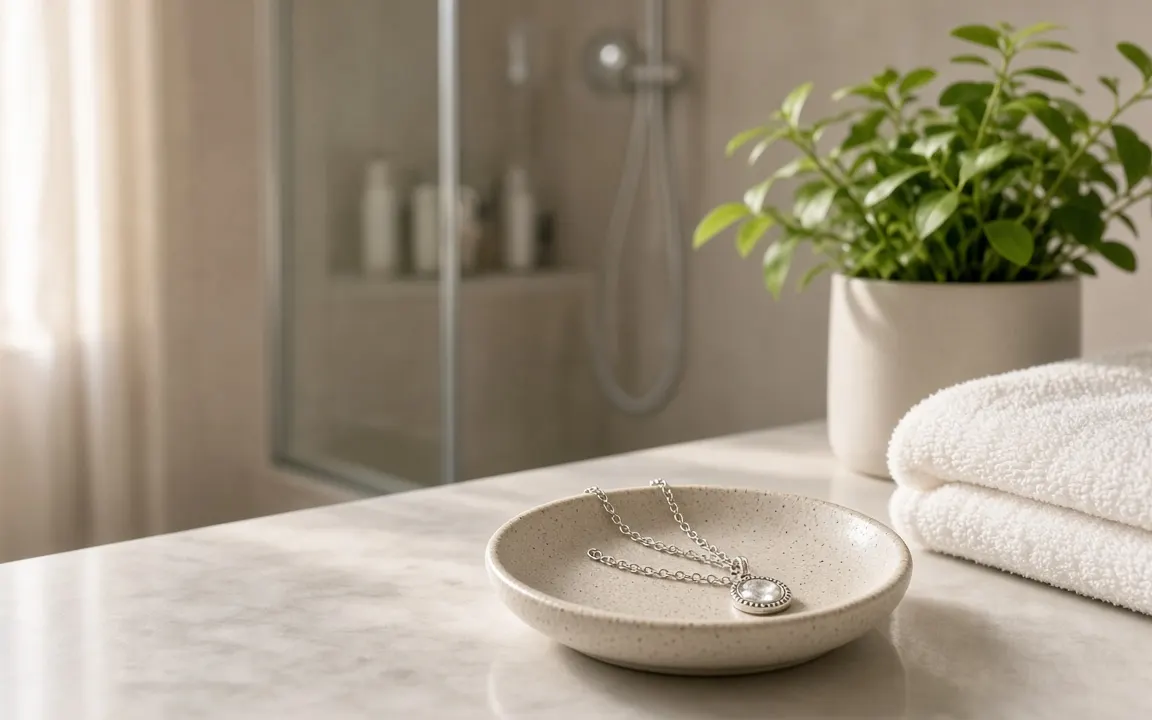
Can you shower or swim in cremation jewelry?
It depends on how the piece holds the ash. The rule of thumb: if it has a screw, take it off before water you'd stand or float in. If the ash is fused into glass or a stone, water can't reach it.
| Piece | Hand-washing and rain | Shower | Pool, sea, hot tub |
|---|---|---|---|
| Screw chamber, glued | Fine | Better off | Take off |
| Screw chamber, unglued | Dry hands soon after | Take off | Take off |
| Maker-sealed capsule | Fine | Usually fine; ask the maker | Take off |
| Fused glass | Fine | Fine | Fine for the ash; watch for knocks |
| Resin | Fine | Occasional is fine | Take off; heat and chlorine cloud it |
| Memorial diamond | Fine | Fine | Fine for the stone; check the setting |
Chlorine and salt water are harder on metal than plain water. Chlorine can pit and discolor silver and gold alloys, and salt dries into the threads. Our closures and daily wear guide explains why a glued screw is still only water-resistant, not waterproof.
What worries you most about wearing your pet's ashes?
Tap an answer to vote and see how others answered. Anonymous.
Should you sleep, exercise or garden in it?
The risk here is catching, not water. Fine chains snag on pillows, weights and brambles, and a sharp tug is how most pieces go missing. A short, sturdy chain reduces the risk; a bedside dish removes it. Flying is usually easy: a small sealed pendant goes through screening like any other jewelry, and the TSA's guidance on cremated remains covers larger containers if you carry a keepsake urn as well.
- Sleep. Fine for glass and short chains; take long chains off.
- Gym and sport. Take off anything that swings. Tuck-in pendants still take sweat and pressure.
- Gardening and cleaning. Remove it; soil scratches, bleach and strong sprays attack metal and resin.
- Cooking. Oven heat and grease are hard on resin and on glue.
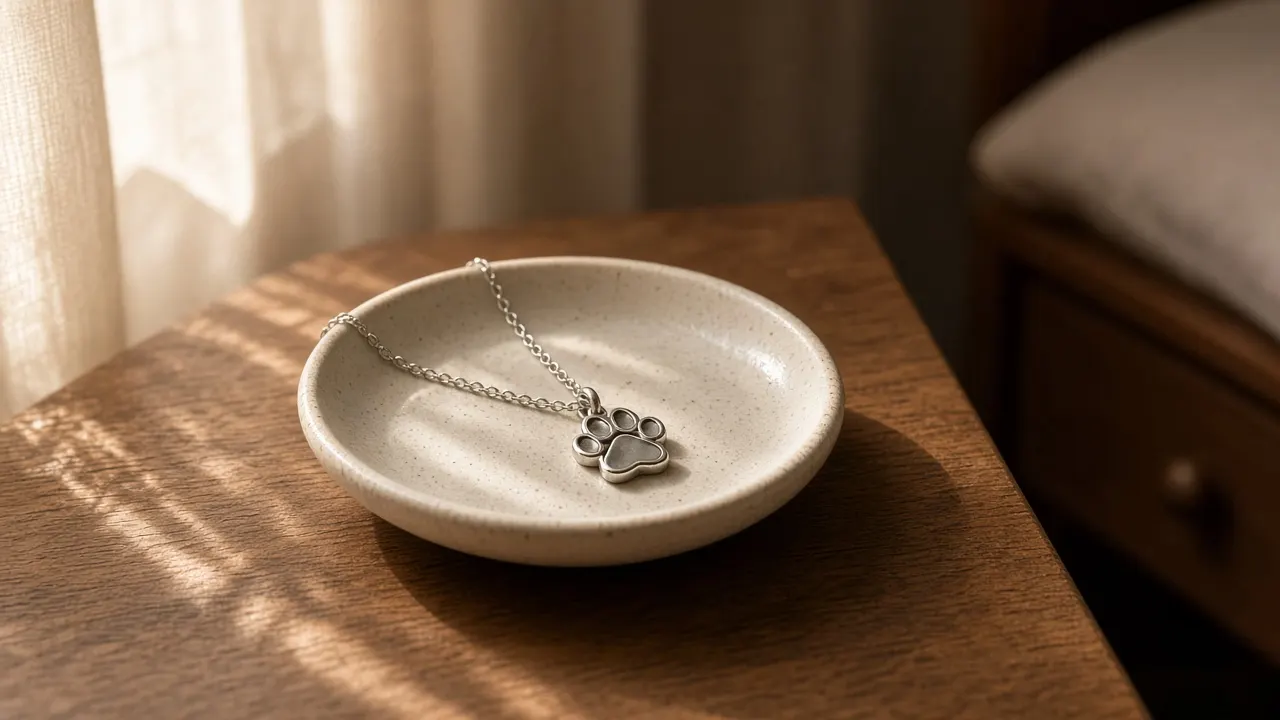
How do you clean each material safely?
Gentle and dry is the whole approach. If your skin reddens or itches under the pendant, the metal may be to blame rather than the cleaning: nickel is a common cause of allergic contact dermatitis, and switching to titanium or solid sterling often solves it. Never soak a chamber piece, never put it in an ultrasonic cleaner unless the maker says it's safe, and keep liquids away from the screw.
- Stainless steel and titanium. Wipe with a cloth dampened in mild soapy water, then a dry cloth. Done.
- Sterling silver. Use a dry silver polishing cloth for tarnish. Avoid liquid dips near the screw.
- Gold. Mild soapy cloth, then dry. Plated gold wears faster with polishing, so go lightly.
- Glass. Warm soapy water is fine for fused glass. Dry the metal bail and chain afterward.
- Resin. A barely damp cloth only. Keep away from alcohol, perfume, hand sanitizer and hot water.
For more on how each metal ages, see our comparison of cremation jewelry metals and styles.
How should you store ash jewelry when you're not wearing it?
Separately, dry and somewhere you'll remember. Chains tangle and scratch each other in a shared box. A small pouch or a lined compartment of its own keeps it safe, and a desiccant sachet in a humid bathroom slows silver tarnish.
Some people keep a memorial piece with the main urn when they're not wearing it, which makes the shelf feel like a small place of its own. Our comparison of jewelry versus keeping ashes at home has ideas for combining the two.
What should you do if a piece leaks, breaks or goes missing?
If it leaks, stop wearing it and put it in a small zip bag so no more ash is lost. Tip any ash you can see from the bag onto white paper and keep it. A jeweler can clean the thread and reseal the screw, or you can refill and reseal it yourself with our filling instructions.
If it breaks, keep every part, including tiny jump rings. A broken chain or clasp is a quick, cheap repair. A cracked glass bead or a chipped resin stone usually can't be repaired, but the artist may be able to make another if you still have ash.
If it's lost, retrace your day and ask anywhere you took it off: gyms, hotels, pools. Then give yourself permission to replace it. A spare portion of ash in a keepsake urn, which typically costs $15–$60[1] (per one large retailer), turns a loss into a sad afternoon rather than a permanent one. Cremation returns about 3-5% of body weight[2], so there's nearly always enough.
Replacement costs vary with the material. By our estimate, a typical sterling silver ash pendant costs ~$190[3], and entry-level sterling runs ~4.4×[4] the price of stainless steel, which is why many people keep a cheap steel spare. Pet-ash jewelry typically costs $30–$300+[5], sterling silver pieces $88–$298[6] at one retailer, and glass studios typically ship 2–8 weeks[7] after receiving ash. The memorial budget planner helps if you're deciding between repair, replacement and insurance.
Free tool
Memorial budget planner
Add up cremation, urn, keepsakes and a farewell so the total holds no surprises.
What if your life is hard on jewelry?
Nurses, builders, parents of toddlers, swimmers: some lives are rough on pendants. Glass or a diamond removes the worry about water; a thick bar pendant on a curb chain survives more knocks than a fine heart. Some people keep a steel piece for work and a silver one for weekends.
Our services page lists sealed and sturdy options, and our look at glass versus resin compares the two no-screw materials. If you'd like help, tell us how you'll wear it and we'll email suitable pieces. For a jeweler who can reseal or repair a piece in person, start with our local pages, and see the reader poll results for how often other people wear theirs.
Taking it off for the pool isn't leaving your pet behind. It's making sure they're still there when you get out.

Reader polls
What would you choose?
Vote anonymously and see how other readers answered. The results are live counts from people who visit this site, so they show real opinions, not a scientific sample.
What worries you most about wearing your pet's ashes?
Tap an answer to vote and see how others answered. Anonymous.
How often do (or would) you wear your memorial piece?
Tap an answer to vote and see how others answered. Anonymous.
Which memorial feels most like your pet?
Tap an answer to vote and see how others answered. Anonymous.

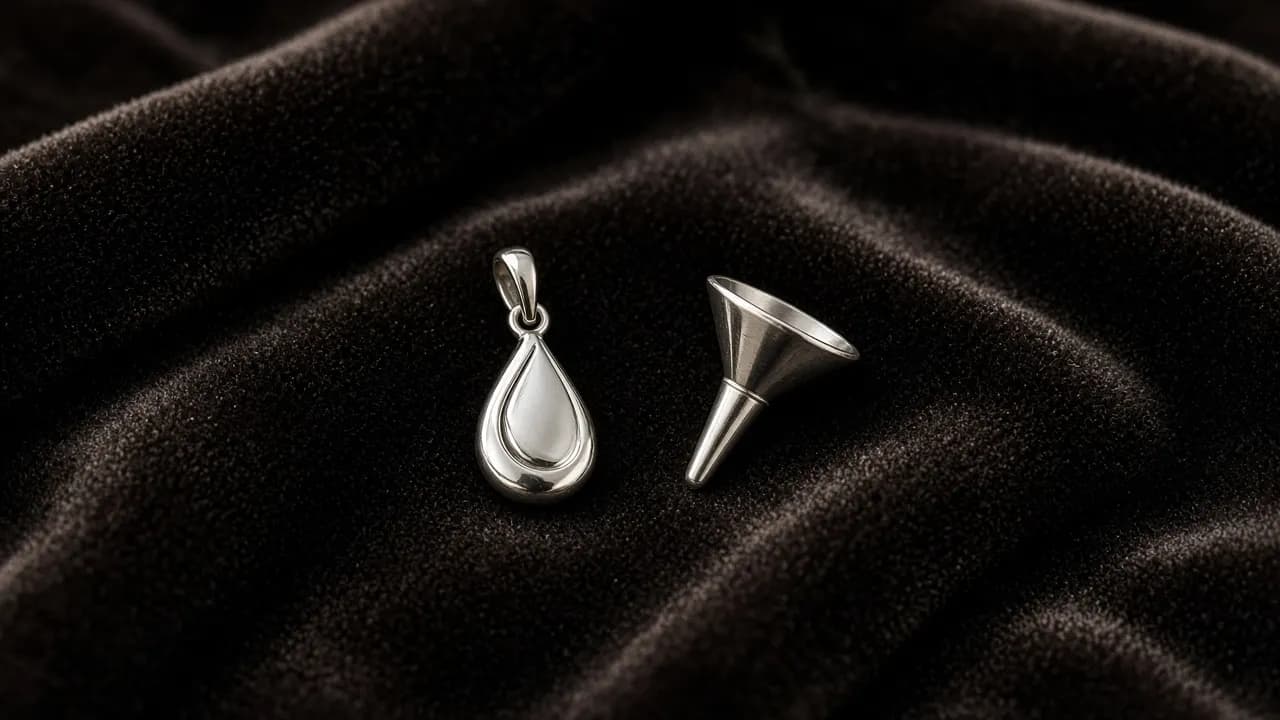
Questions people ask
Can cremation jewelry get wet?
A splash or hand-washing won't harm most pieces. Screw-chamber pendants and rings should come off for showers, swimming and hot tubs, because soap, chlorine and salt can work into the threads over time. Fused glass and memorial diamonds can get wet without risk to the ash inside.
Can I wear cremation jewelry in the ocean?
Glass and diamond pieces can go in the sea, though waves and sand are a risk to any chain. Take chamber pieces off first, since salt water dries into threads and can corrode some metals. If you do get a chamber piece wet, rinse it in fresh water and dry it straight away.
How do I clean tarnish off a silver cremation pendant?
Use a dry silver polishing cloth and gentle strokes. Avoid liquid silver dips and toothpaste, which can seep into the screw or scratch the surface. For heavy tarnish, a jeweler can polish it professionally without opening the chamber.
Why is my resin memorial piece going cloudy?
Heat, strong sunlight, perfume, alcohol and hand sanitizer can all cloud or yellow resin over time. It's usually on the surface, and some makers can repolish it. To slow it down, keep resin pieces out of hot cars and apply perfume and lotion before putting the piece on.
Is it bad luck to take off cremation jewelry?
Not at all. Taking a piece off to keep it safe is part of caring for it. Many people have a small ritual, such as putting it beside a photo at night, that makes taking it off feel like part of remembering rather than a break from it.
Can I insure cremation jewelry?
Many home and contents policies cover jewelry up to a limit, and valuable pieces such as gold or memorial diamonds can often be listed separately. Insurance can replace the piece but not the ash, which is one more reason to keep a small reserve at home.


Sources and our estimates
- [1] Keepsake or mini pet urns cost about $15–$60, versus $25–$100 for small and $40–$200 for medium urns (Memorials.com). Memorials.com – Pet Urn Cost Guide, 2025.
- [2] Embrace notes cremated remains typically weigh about 3-5% of the pet's original body weight. Embrace Pet Insurance - Bury or Cremate Your Dog? Costs, Pros & Cons, 2025.
- [3] The typical sterling silver pet cremation pendant costs about $190, based on the middle of three sellers' price points. Our estimate: median of [Urns.com median $129, Memorials.com midpoint of $87.95–$297.95 = $193, Final Gift sterling paw pendant $240]. How we calculate.
- [4] Entry-level sterling silver pet-ash necklaces cost about 4.4 times entry-level stainless steel ones. Our estimate: $87.95 / $19.95 (Memorials.com starting prices). How we calculate.
- [5] Cremation jewelry that holds pet ashes typically costs $30–$300+. Memorials.com – Pet Cremation Cost Guide 2026, 2026.
- [6] Sterling silver pet-ash necklaces at Memorials.com cost $87.95–$297.95. Memorials.com – Pet ashes necklaces, 2026.
- [7] Ashes-in-glass studios typically ship pieces 2–8 weeks after receiving the ashes. Funeral.com – Ashes in Glass for Pets, 2026.
Find a sturdier piece for everyday wear
Tell us what you need and where you are. We'll reply by email with clear options and prices so you can decide in your own time.