How cremation jewelry closes, seals and survives everyday wear
Most pet ash jewelry is sealed one of three ways: a tiny screw you close yourself, a capsule the maker seals, or ash fused into glass, resin or a stone. The first is cheap and quick but relies on your glue; the other two trade flexibility for peace of mind.
By the Cremation Jewelry & Memorial Wearables editorial team · Updated September 24, 2026 · 6 min read · Sources
- The three ways ash is held inside a piece
- When and how to glue a screw closure
- A two-minute monthly seal check
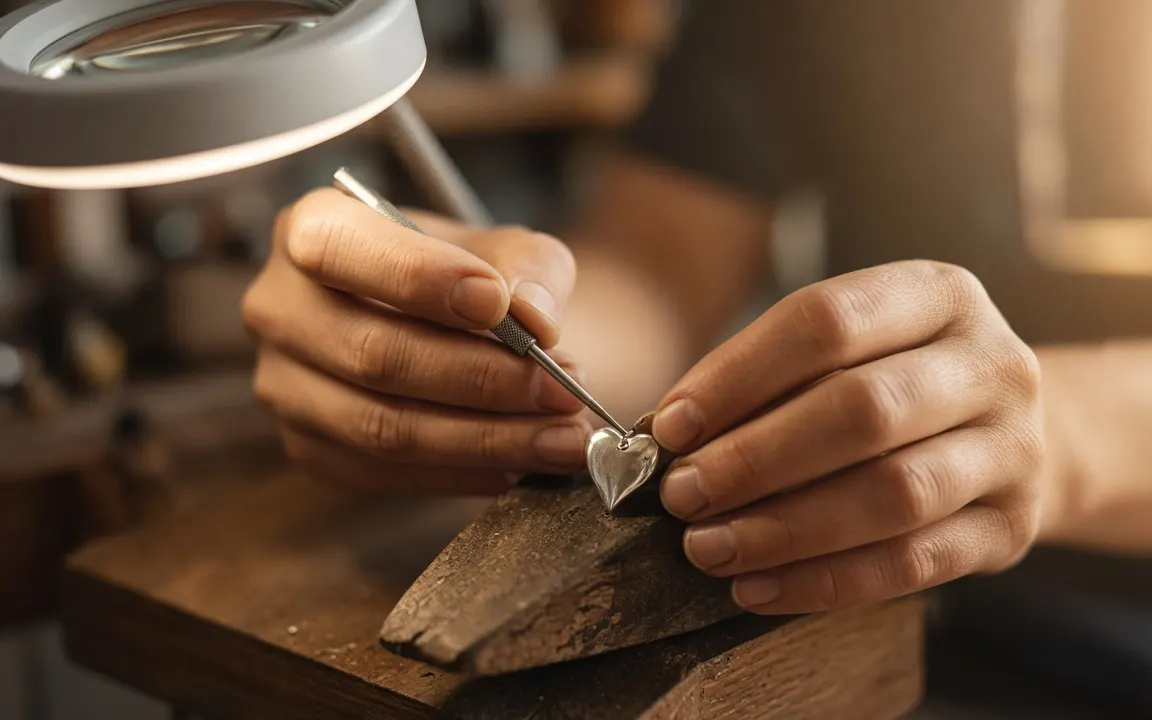
What are the three ways jewelry holds ashes?
Before you compare shapes or metals, find out how the piece keeps ash inside. That single detail decides whether you can fill it tonight, whether it can ever be opened again and how careful you'll need to be in the shower.
- Open chamber with a screw. A hollow charm with a threaded opening, closed by a screw no bigger than a grain of rice. You fill it at home and decide whether to glue it shut.
- Sealed capsule or insert. The maker fills a small vial or cavity, then closes it with solder, a pressed plug or a permanent setting. Nothing on the outside can be unscrewed.
- Fused or set material. The ash becomes part of the piece: melted into glass, suspended in resin or, for memorial diamonds, turned into carbon for a grown stone. There is no chamber at all.
The amounts are small in every case. A typical chamber takes a pinch, and even roomy designs top out at about a teaspoon[1]. Glass work uses 1/8–1/2 tsp[2] of ash (per one urn retailer's guide). Cremation returns about 3-5% of body weight[3], mostly bone mineral according to a study of 100 cremations, so the build you choose is about lifestyle, not about whether there's enough to go round.
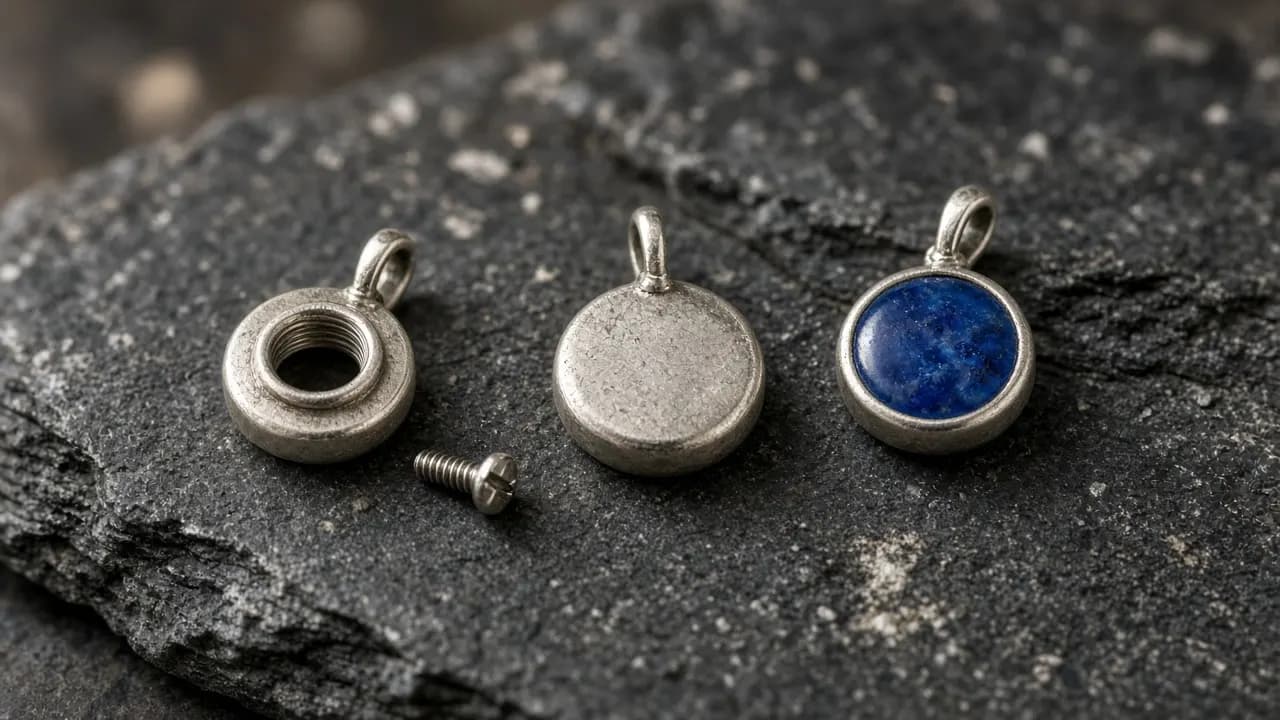
Which screw closures hold ash most securely?
Screw chambers aren't all the same. Where the screw sits changes how much strain it takes, because the part of a pendant that touches the chain moves every time you do.
| Closure | Where it sits | How it behaves in daily wear | Can you refill it? |
|---|---|---|---|
| Screw through the bail | Top of the pendant, under the chain loop | Chain rubs right beside the threads, so gluing matters most here | Only if left unglued |
| Screw at the base | Bottom point of a heart, drop or paw | Takes less friction; easy to check by eye | Only if left unglued |
| Screw-top cylinder | A cap that unscrews from a barrel | Roomier; longer thread gives a firmer seal | Usually, with care |
| Maker-sealed capsule | Hidden inside a setting | Nothing to loosen; relies on the maker's work | No |
A longer thread is usually a firmer thread. If a seller can tell you how many turns the screw takes to close, you're dealing with someone who knows their product. Cylinders and bars often have more thread than a heart with a pin-sized screw at the point.
Our step-by-step article on filling cremation jewelry shows how to get ash into each of these without spills, and the ash capacity guide estimates how many pieces your pet's ashes could fill.
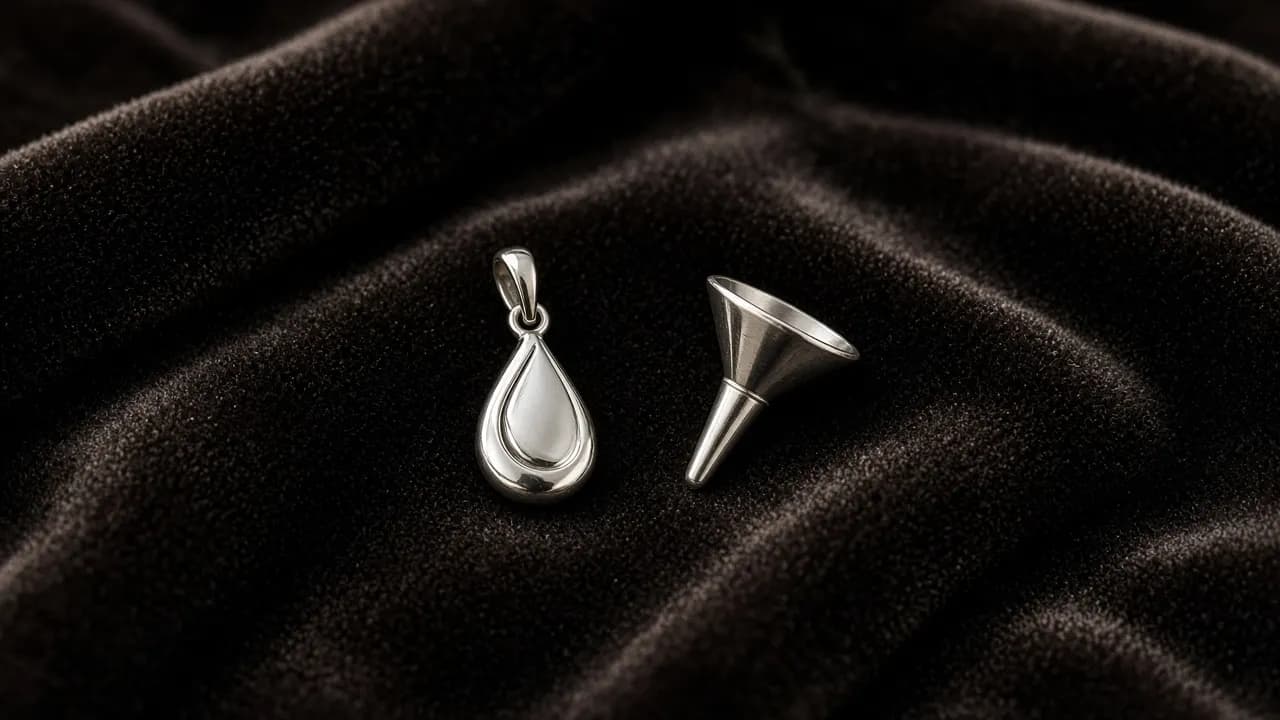
Free tool
Jewelry ash capacity guide
How much ash fits in pendants, rings and glass, and how many pieces one pet can fill.
Should you glue the screw shut, and with what?
Most people should. An unglued screw can back out slowly, a quarter turn at a time, as the pendant swings. The kit's own sealant is designed for this job. If the kit didn't include one, a jeweler can seal it, or you can use a small drop of gel-type instant glue on the threads, applied with a toothpick rather than straight from the tube.
- Wipe the threads with a dry cotton bud first. Ash dust on the threads weakens any bond.
- Put glue on the screw's threads, not into the chamber opening, so none touches the ash.
- Turn the screw until it stops, then stop. Forcing it can strip a soft silver thread.
- Leave the pendant upright and untouched overnight before wearing it.
Some people ask the maker to do it. If you're mailing a portion anyway for engraving or a custom piece, ask whether filling and sealing is included. Our cremation jewelry order checklist lists the questions that make sure it's done the way you want.
What does everyday wear do to an ash pendant?
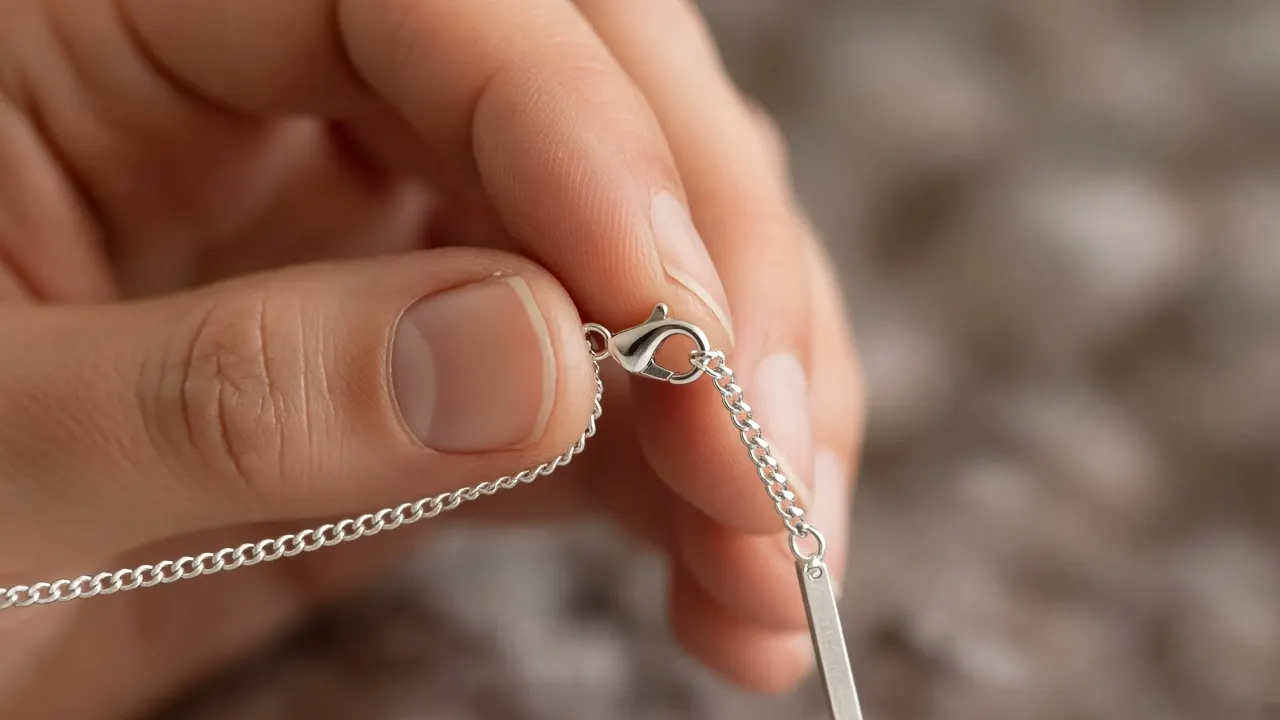
The weak points on a worn pendant are almost never the ash chamber itself. They're the chain, the clasp and the jump ring that joins them. A thin box chain can snap on a car seatbelt; a spring-ring clasp can open if it's pulled sideways. A lobster clasp and a medium cable or curb chain survive far more tugging.
Price is a rough signal, not a promise. Pet-ash jewelry typically costs $30–$300+[4], and by our estimate the typical sterling silver pendant sits at ~$190[5]. At the cheap end you may be paying mostly for the pendant, with a thin plated chain thrown in. Budget a few extra dollars for a sturdy chain in the same metal. Our comparison of metals and styles shows what each material costs and how it wears.
Rings are a harder life. They bang on railings, car doors and shopping trolleys, and any screw on the outside of a band is exposed to all of it. If a ring is your choice, pick one where the ash sits under a solid top or inside the band. The full range of pieces, including glass and resin, is on our services page.
When should you take the piece off?
Think about grip, heat, water and chemicals. Anything that could catch the chain or soak the threads for a long time is a reason to take a chamber piece off and put it somewhere safe. The same goes for an itch or rash under the chain: nickel in cheap findings is a common cause of allergic contact dermatitis, and the fix is usually a better chain rather than a new pendant.
- Swimming pools, hot tubs and the sea, where chlorine and salt get into threads.
- Contact sports, climbing and heavy gym sessions, where chains catch.
- Gardening and cleaning with bleach or strong sprays.
- Sleep, if you toss and turn or have a pet who likes to paw at your neck.
- Medical scans and surgery, where staff will ask you to remove metal anyway.
Glass and memorial diamonds are sealed by their nature, so water can't reach the ash. They can still chip or come loose from a setting. Our notes on wearing and caring for ash jewelry cover cleaning each material without harming it.
How often do (or would) you wear your memorial piece?
Tap an answer to vote and see how others answered. Anonymous.
How can you tell a pendant is still sealed?
Give chamber pieces a quick look once a month, and after any day at the beach or a long trip. It takes less time than making a cup of tea.
- Look at the join between screw and pendant under a bright light. There should be no gap and no grey dust in the thread.
- Hold the pendant over a sheet of white paper and tap it gently. Nothing should fall out.
- Try the screw with your fingertips, without tools. A glued screw shouldn't move at all.
- Check the jump ring and clasp for gaps or thin, worn spots.
If you ever see ash on the paper, stop wearing it and put it in a small sealed bag. A jeweler can usually reseal it. If you're weighing a repair against a replacement, our breakdown of what cremation jewelry costs shows where each price range sits.
Why keep a little ash in reserve?
Even a sealed piece can be lost on a beach or dropped down a drain. A small reserve means that loss is painful but fixable. A spare pinch in a keepsake urn, which typically costs $15–$60[6] (per one large retailer), lets you refill a replacement without reopening the main urn.
A 12 lb cat returns about 6.7 oz[7] of ashes, many times what a pendant takes, so holding back a little costs nothing that matters. If you'll be flying with the piece, read our guide to traveling with ash jewelry before you pack. And if you'd like someone to do the legwork, tell us what you're looking for. Our local pages help you find a jeweler nearby to reseal a screw, and the results board shows which worries about wearing ash come up most.
Choose the seal first and the shape second. A beautiful pendant that worries you every time you wash your hands won't be worn.

Reader polls
What would you choose?
Vote anonymously and see how other readers answered. The results are live counts from people who visit this site, so they show real opinions, not a scientific sample.
How often do (or would) you wear your memorial piece?
Tap an answer to vote and see how others answered. Anonymous.
What worries you most about wearing your pet's ashes?
Tap an answer to vote and see how others answered. Anonymous.
Which memorial feels most like your pet?
Tap an answer to vote and see how others answered. Anonymous.

Questions people ask
Is cremation jewelry waterproof?
Glass, resin and memorial diamonds keep water away from the ash because there's no opening. Chamber pendants are only water-resistant, even when glued. Hand-washing and rain are usually fine, but long soaks in pools, hot tubs or the sea can work into the threads over time, so take chamber pieces off first.
What glue should I use to seal a cremation pendant?
Use the sealant supplied with the kit if there is one. Otherwise a small amount of gel-type instant glue on the screw threads works for most metal pendants. Apply it with a toothpick, keep it away from the ash, close the screw and leave it upright overnight before wearing.
Can I open a glued cremation pendant again?
Not easily. A jeweler may be able to soften some adhesives, but there's a real risk of damaging the thread or the pendant. If you think you'll want to add ashes later, for example from a second pet, leave the screw unglued, check it regularly and keep a separate reserve instead.
Why did my pendant screw come loose?
Usually because it wasn't glued, the thread had ash dust on it when it was closed, or the chain rubs right next to the screw. Clean the threads, reseal it or ask a jeweler to, and consider a pendant with the screw at the base rather than under the bail for your next piece.
Can I sleep in cremation jewelry?
Many people do, especially with short, sturdy chains or glass pieces. Long, fine chains can tangle or snap overnight, and screw closures take more strain when you roll over. If you want to keep it close at night, a bedside dish or small box is a safe alternative.
Do sealed capsule pendants ever leak?
It's uncommon when the maker has soldered or permanently set the capsule, because there's nothing on the outside to loosen. A hard knock can still crack a setting. Ask the maker how the capsule is closed and what they do if the seal ever fails.


Sources and our estimates
- [1] An ashes pendant holds only a pinch of cremated remains (the retailer says at most about a teaspoon; most pendants hold far less), and most come with a small funnel fill kit. Memorials.com – Pet ashes necklaces, 2026.
- [2] Ashes-in-glass pet memorials use only about 1/8 to 1/2 teaspoon of ashes. Funeral.com – Ashes in Glass for Pets, 2026.
- [3] Embrace notes cremated remains typically weigh about 3-5% of the pet's original body weight. Embrace Pet Insurance - Bury or Cremate Your Dog? Costs, Pros & Cons, 2025.
- [4] Cremation jewelry that holds pet ashes typically costs $30–$300+. Memorials.com – Pet Cremation Cost Guide 2026, 2026.
- [5] The typical sterling silver pet cremation pendant costs about $190, based on the middle of three sellers' price points. Our estimate: median of [Urns.com median $129, Memorials.com midpoint of $87.95–$297.95 = $193, Final Gift sterling paw pendant $240]. How we calculate.
- [6] Keepsake or mini pet urns cost about $15–$60, versus $25–$100 for small and $40–$200 for medium urns (Memorials.com). Memorials.com – Pet Urn Cost Guide, 2025.
- [7] A 12 lb cat would be expected to return about 6.7 oz (0.42 lb) of cremated remains. Our estimate: 12 lb x 3.5% x 16 oz/lb. How we calculate.
Get help choosing a piece that fits your life
Tell us what you need and where you are. We'll reply by email with clear options and prices so you can decide in your own time.