Is it weird to wear your pet's ashes? What ash jewelry can and can't do for grief
No, it isn't weird. Wearing a small amount of a loved one's ashes is a common, quiet way to keep them close, and grief for a pet is real grief: 40%[1] of owners in one report said it equaled or exceeded grief after losing a person. Whether it helps you is personal, and it's fine to try it and change your mind.
By the Cremation Jewelry & Memorial Wearables editorial team · Updated September 24, 2026 · 4 min read · Sources
- Why so many people find it comforting
- Signs it might not be right for you yet
- Gentle ways to answer other people's questions

Why do people wear their pet's ashes?
Because the bond didn't end when your pet died, and it doesn't have to. Grief researchers describe continuing bonds: the ordinary, healthy ways people stay connected to someone they've lost, from talking to a photo to wearing something that belonged to them. A pendant holding a pinch of ash is one more version of that.
Pets are family to most people. A US Harris Poll found 95%[2] of pet owners considered pets family members, and in the UK, 99.3%[3] of bereaved owners in the RSPCA's pet-loss survey saw their pet as family, a friend or a companion. Wanting to keep a family member close is about as ordinary as it gets.

How can ash jewelry help with grief?
Pet grief often catches people off guard. By our estimate, ~6.8 per 100 adults[4] in the UK may have had a pet's death hit them harder than any human loss, a figure we calculated from a PLOS ONE survey of 975 UK adults. In the RSPCA survey, 66.9%[5] were surprised by how intense it was, and 57.1%[6] felt they had to hide it. A small piece you can touch without anyone noticing gives that hidden grief somewhere to go.
- A private anchor. Touching it in a hard moment, at work or in traffic, can steady you.
- A way through firsts. The first vet visit with a new pet, the first holiday, the first walk on your old route.
- Something to do. Choosing and filling a piece is a small, caring task at a time when there's nothing else to do for your pet.
- A shared ritual. Matching pieces for family members can bring people together around the loss.
How often do (or would) you wear your memorial piece?
Tap an answer to vote and see how others answered. Anonymous.
When might it not be right, or not yet?
For some people, a pendant is a constant pull back to the loss rather than a comfort. If you find yourself checking the screw anxiously, unable to take it off, or feeling worse each time you notice it, that's a signal worth listening to. It doesn't mean you loved your pet less.
Some people simply aren't ready in the first weeks. The ashes will keep. You can fill a pendant months or years later, and many people do it on an anniversary. If you'd rather keep the ashes whole for now, our comparison of jewelry and an urn at home may help you think it through.
What do you say when people ask about it?
Most people won't know it's a memorial unless you tell them. When they do ask, you choose how much to share. It's a necklace for my dog is a complete answer. So is simply saying thank you when someone compliments it.
Some reactions will sting. In the RSPCA survey, 34.5%[11] of bereaved owners had been told it's just a pet, and only 13.4%[12] felt fully understood. You don't owe anyone a defense of your grief or your jewelry. People who have lost a pet themselves tend to understand immediately.
Children often find ash jewelry fascinating rather than upsetting, especially if they help choose it. A simple, honest explanation, a tiny bit of our pet is inside so we can keep them close, usually goes down well. Matching pieces for siblings can be planned with the ashes sharing planner.
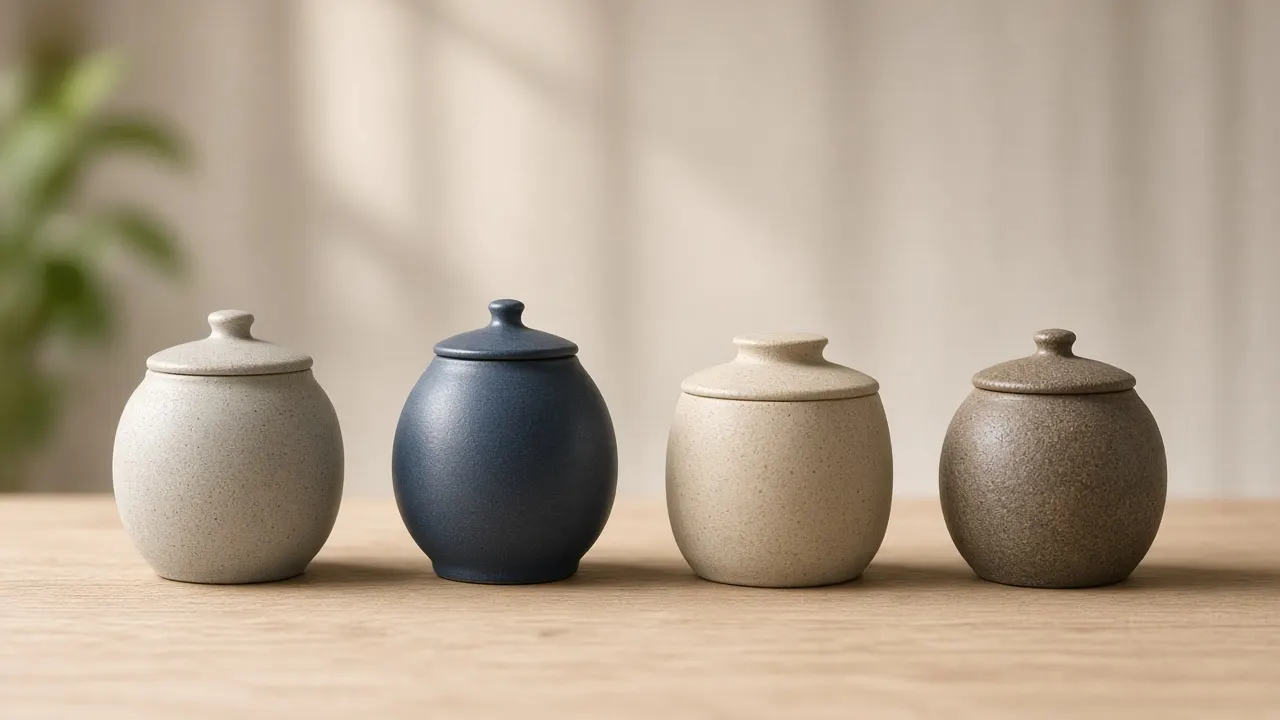
Free tool
Ashes sharing planner
Split ashes fairly between family members, keepsake urns and jewelry.
How do you choose a piece that feels right?
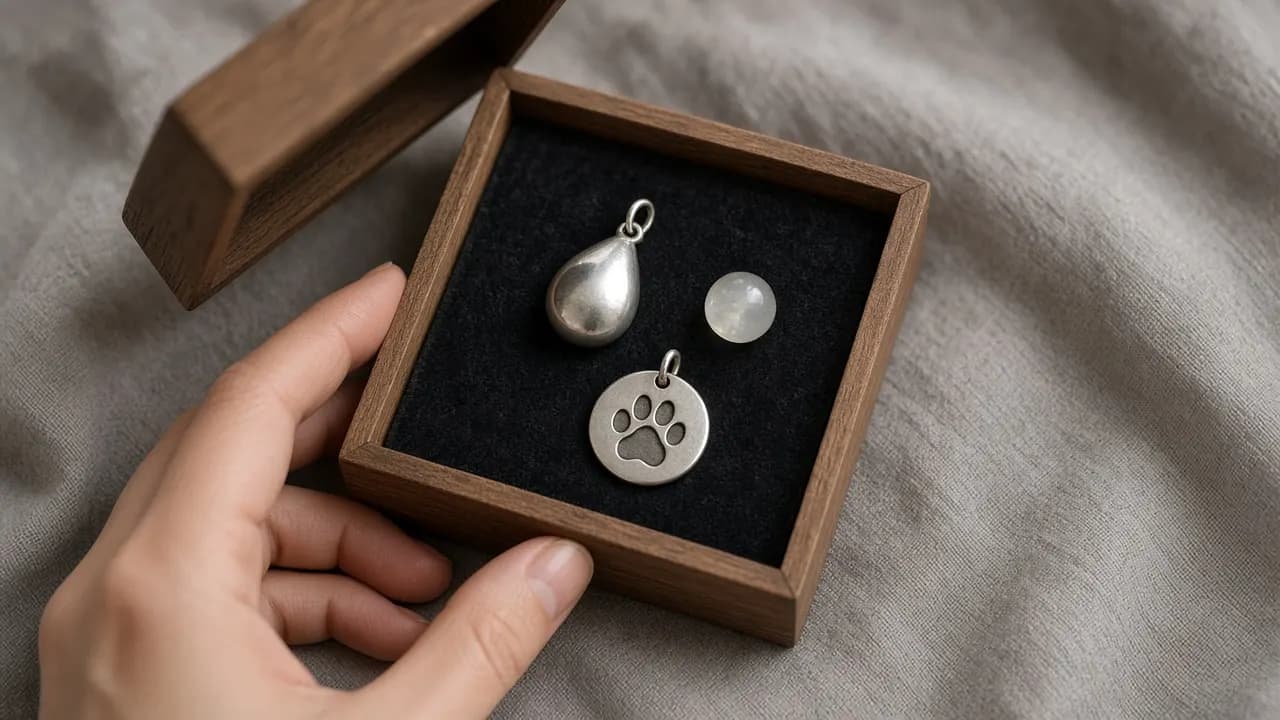
Start with how visible you want it to be. A plain bar or teardrop can pass as ordinary jewelry; a paw or engraved nose print says memorial to anyone who looks. Glass and resin can show swirls of ash or a tuft of fur. There's no wrong level of visibility.
Then think about how you'll feel if it gets lost. A self-fill steel pendant is easy to replace; a memorial diamond isn't. Our metals and styles comparison and the full services page show the range. If you'd like something with your pet's actual print, see our engraving guide.
What if you change your mind later?
Then you change your mind. A pendant can go back into the urn, be kept in a box with a collar and a photo, be buried with the rest of the ashes, or be passed to someone who'd treasure it. Some people wear it daily for a year, then only on anniversaries. That's grief doing what it does: changing shape.
If you're still weighing it up, our guides cover the practical side, and the live poll results show how often other readers wear theirs. Or tell us about your pet, and we'll email a few gentle options with no pressure to choose. If you'd prefer to choose a piece in person, our local pages explain what's usually available near you.
Wearing their ashes isn't holding on too tight. It's carrying a little of them into the life they helped you build.

Reader polls
What would you choose?
Vote anonymously and see how other readers answered. The results are live counts from people who visit this site, so they show real opinions, not a scientific sample.
How often do (or would) you wear your memorial piece?
Tap an answer to vote and see how others answered. Anonymous.
What helped you most in the first weeks?
Tap an answer to vote and see how others answered. Anonymous.
Compared with losing a person, losing your pet felt...
Tap an answer to vote and see how others answered. Anonymous.

Questions people ask
Is it morbid to wear cremation jewelry?
Most people don't find it morbid at all. The ash is a tiny amount of dry, sand-like mineral, sealed inside a piece that looks like ordinary jewelry. For many, it's simply a way of keeping someone they loved close, much like wearing a grandparent's ring.
Is it bad to wear a pet's ashes during pregnancy or around children?
Cremated remains are mostly inert bone mineral, and in a sealed pendant they don't touch your skin, so most people wear them through pregnancy and around children without a second thought. Check the seal now and then, keep small pendants away from toddlers who put things in their mouths, and ask your doctor if you have a specific worry.
Does wearing ashes make grief last longer?
There's no good evidence that it does. For many people it's a comfort that eases over time into an occasional ritual. If you notice it making you feel worse, take a break from wearing it. That's a normal adjustment, not a failure.
Can I wear ash jewelry for a pet and a person together?
Yes. Some people combine ashes from a person and their pet in one piece, or wear two pendants on one chain. Talk to other family members first if the person's ashes are shared, and label each portion clearly if a maker is involved.
What should I do with the jewelry if I no longer want to wear it?
Keep it somewhere meaningful, such as with the urn, a collar or a photo. You can also bury or scatter it with the rest of the ashes, or give it to a family member. There's no rule that it has to be worn forever.
Should I wait before getting cremation jewelry?
Only if you want to. Some people find comfort in filling a pendant the week the ashes come home; others wait months or until an anniversary. Ashes keep indefinitely in their sealed bag, so there's no deadline, and waiting until it feels right is a sound choice.


Sources and our estimates
- [1] Mordor Intelligence reports that 40% of owners say their grief after a pet's death equals or exceeds grief after a human loss. Mordor Intelligence — Pet Funeral Services Market report page, 2025.
- [2] A 2015 Harris Poll found 95% of U.S. pet owners consider pets family members, up 7 points since 2007. SHRM — Grieving a Pet's Death: Should Workers Get Time Off? (2016), 2015.
- [3] In the RSPCA's pet-loss survey (over 4,000 respondents), 99.3% saw their pet as family, a friend or a companion. RSPCA — Pet Loss Survey Results, 2026.
- [4] About 7 in every 100 UK adults may have had a pet's death hit harder than any human loss. Our estimate: 32.6% have lost a pet x 21% chose pet as most distressing. How we calculate.
- [5] 66.9% of respondents were surprised by how intense their grief was after losing a pet. RSPCA — Pet Loss Survey Results, 2026.
- [6] 57.1% felt they had to hide their grief after a pet died, and 57.8% perceive stigma around pet loss. RSPCA — Pet Loss Survey Results, 2026.
- [7] A 2009 Bulletin of the Menninger Clinic study of 106 pet owners found nearly 1 in 3 grieved for at least six months. SHRM — Grieving a Pet's Death: Should Workers Get Time Off? (2016), 2009.
- [8] Tufts University's Pet Loss Support Helpline (508-839-7966) is free and volunteer-staffed, 6–9 pm ET Monday to Thursday, with 24-hour voicemail. Tufts Cummings School of Veterinary Medicine, 2026.
- [9] Cornell's free Pet Loss Support Hotline (607-218-7457) is staffed by veterinary students trained by professional grief counselors. Cornell University College of Veterinary Medicine, 2026.
- [10] Blue Cross's Pet Bereavement Support Service in the UK is a free, confidential phone and email helpline open 365 days a year. Wikipedia – Blue Cross (animal charity), 2026.
- [11] 34.5% of bereaved pet owners were told 'it's just a pet'. RSPCA — Pet Loss Survey Results, 2026.
- [12] Only 13.4% of bereaved pet owners felt fully understood by others. RSPCA — Pet Loss Survey Results, 2026.
Explore memorial pieces at your own pace
Tell us what you need and where you are. We'll reply by email with clear options and prices so you can decide in your own time.