Share your pet's ashes fairly between the people who loved them
When a pet belonged to a whole family, jewelry lets everyone keep a share. Cremation returns about 3-5% of body weight[1], and this planner shows how far that goes.
- Add a line for each person and what they want
- See the volume each piece takes
- Know what's left for the urn before anyone opens it
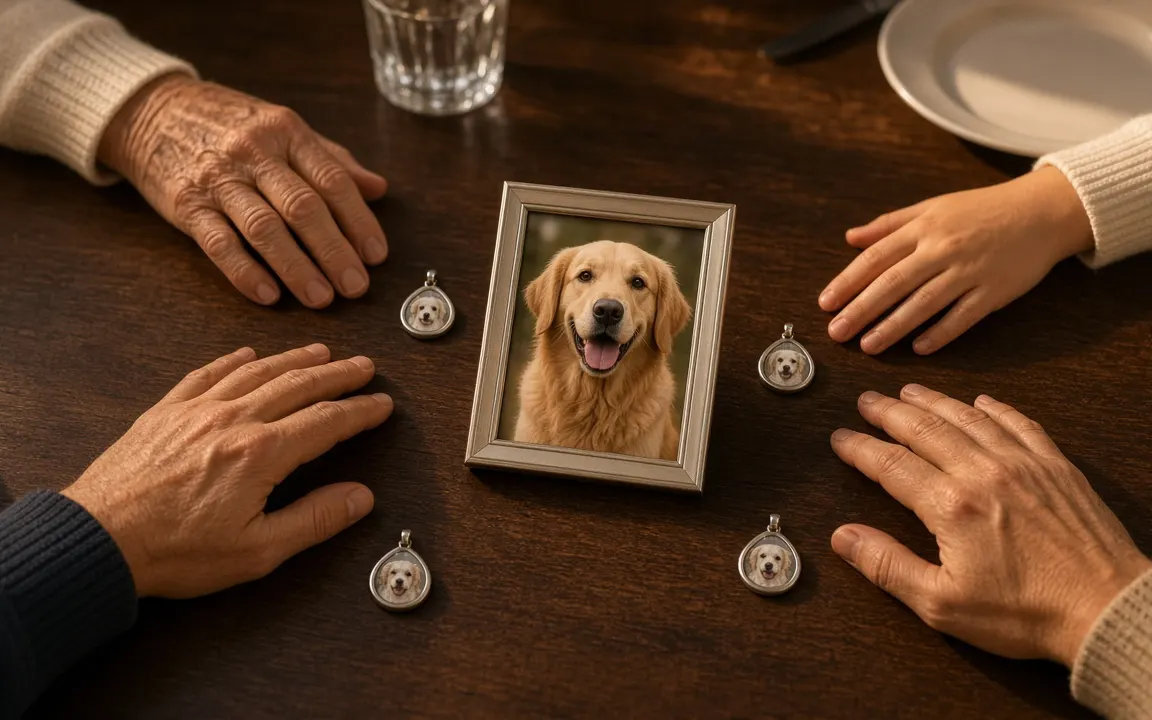
Ashes sharing planner
Plan who keeps what. We work in cubic inches, the unit urns and keepsakes are sold in (about 1 cu in per lb of body weight).
Left for the main urn
47 cu in (769 mL)
Out of about 50 cu in in total.
| Person | Keepsake | Ashes |
|---|---|---|
| Me | Keepsake urn | 3 cu in |
| Person 2 | Pendant | 0.05 cu in |
| Main urn | 47 cu in | |
A pendant holds about a pinch of ashes and a ring even less, so jewelry barely changes what's left. Scattering tubes vary a lot in size; check the one you choose.
Source: Embrace Pet Insurance - Bury or Cremate Your Dog? Costs, Pros & Cons; Our estimate. keepsake capacities are typical sizes, so check the product you choose
Next step: Ask a local provider to divide the ashes for you →
Before anyone opens the container
Why it helps to agree the split first
Dividing ashes can feel strangely loaded. One person wants to scatter them at the lake, another can't bear to part with any, and a teenager quietly wants a ring. Writing the plan down first, with the real volumes beside each wish, tends to calm things, because it shows there's enough for everyone. Our live poll results include a question on how many family members want a piece, and our article on how much ash a pendant holds explains why jewelry takes so little.
It's also practical. Opening the container once, with everything ready, means less handling and fewer spills than opening it every time someone decides. If the ashes haven't come home yet, you can even ask the crematory to portion them for you.
Would you get a piece for anyone else in the family?
Tap an answer to vote and see how others answered. Anonymous.
Using the planner
How to use the sharing planner
- Set the total. Enter your pet's body weight, or the volume in cubic inches if you know it.
- Add a row per person. Give each a name if you like, then choose what they'd like: pendant, ring, keepsake urn or a small scattering tube.
- Set quantities. Someone who wants two of the same piece picks a quantity of two; someone who wants a pendant and a ring gets two rows.
- Check what's left. The planner shows each person's share in a table and the figure left for the main urn, or "Not enough ashes" if the plan asks for more than there is.
The planner works in cubic inches because that's how urns and keepsakes are sold. It uses about one cubic inch of ash per pound of body weight, the rule of thumb in the urn trade.
The numbers behind it
The volumes the planner uses for each item
| Item | Typical volume | Share of a 10 lb pet's ashes |
|---|---|---|
| Pendant | 0.05 cu in | About 0.5% |
| Ring | 0.02 cu in | About 0.2% |
| Keepsake urn | 3 cu in | About 30% |
| Small scattering tube | 10 cu in | Roughly all of it |
The table makes the key point clear: jewelry barely registers, while keepsake urns and scattering tubes take real amounts. For a small pet, a single keepsake urn can take a large share. For a big dog, it hardly matters. By our estimate, a giant-breed dog returns about 3.8 lb[2], needing an urn of over 100 cubic inches.
A family example
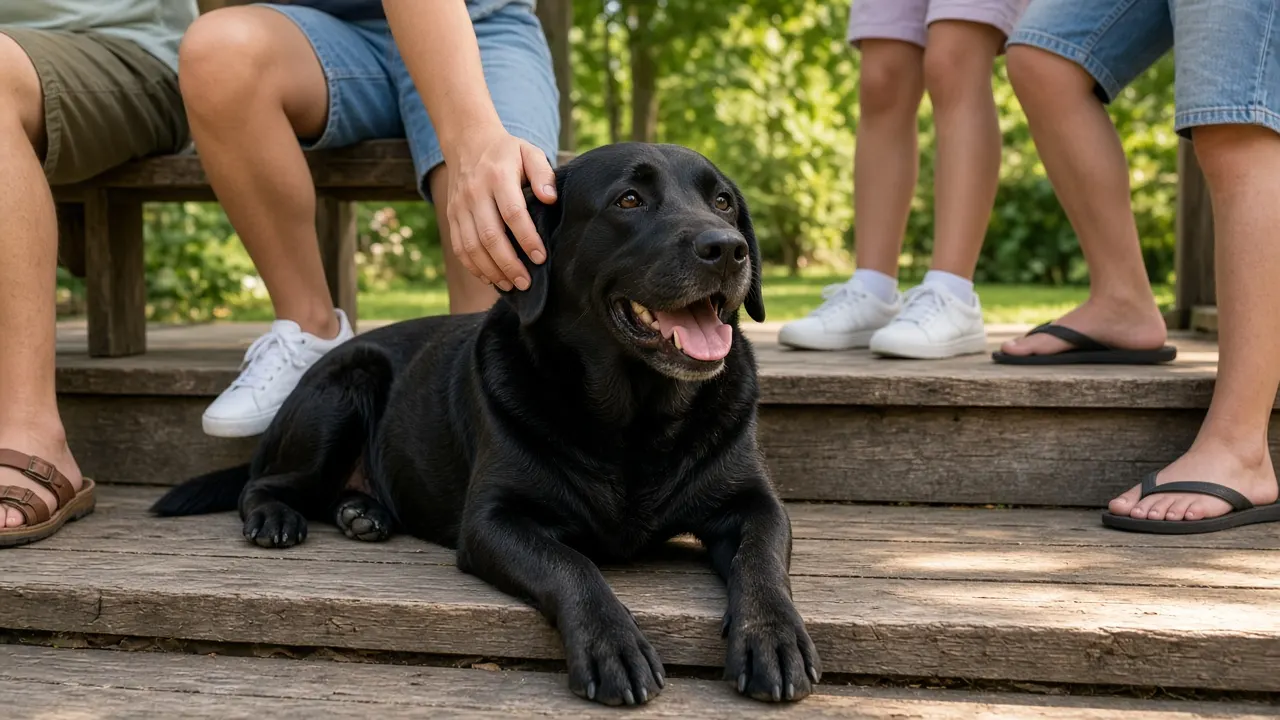
Worked example: a 70 lb Labrador shared five ways
A 70 lb dog gives roughly 70 cubic inches of ashes. Our own urn-size estimates (12 cu in (cat); 70 cu in (dog)[3]) use exactly this rule. Here's how one family might plan it:
- Two parents: matching pendants, 0.1 cu in together
- Adult daughter abroad: a ring, 0.02 cu in
- Grandmother: a small keepsake urn, 3 cu in
- Son: a scattering tube for the beach they walked, 10 cu in
- Main urn at home: about 57 cu in, roughly 81% of the ashes
Even with a keepsake and a scattering, most of the ashes stay together. If the daughter lives abroad, a self-fill ring mailed empty for her to fill locally avoids sending ashes across a border. Our guide to traveling with ashes covers carrying a portion by air instead, and the TSA's guidance on cremated remains explains how containers are screened at US airports.
Keeping it gentle
Tips for dividing ashes without hurt feelings
- Ask, don't assume. Not everyone wants to wear ashes; some prefer a fur clipping, a print or a photo.
- Keep a reserve. Set aside a spoonful for pieces lost, broken or requested later.
- Let the main carer choose first. Whoever did the daily care often has the strongest feelings about the urn.
- Consider matching pieces. Identical pendants can feel like a family bond rather than a division.
Grief can make these conversations harder than they need to be. In the RSPCA's pet-loss survey, 66.9%[4] of bereaved owners were surprised by how intense their grief was. Give people time, and don't be afraid to leave a decision for a few weeks.
Some relatives will be unsure whether they want to wear ashes at all, and that's worth respecting rather than persuading. Our reflection on choosing whether to wear an ash memorial can be a gentle thing to share with them. A person who says no today can still have a piece made from the reserve later, once the first raw weeks have passed.
Free tool
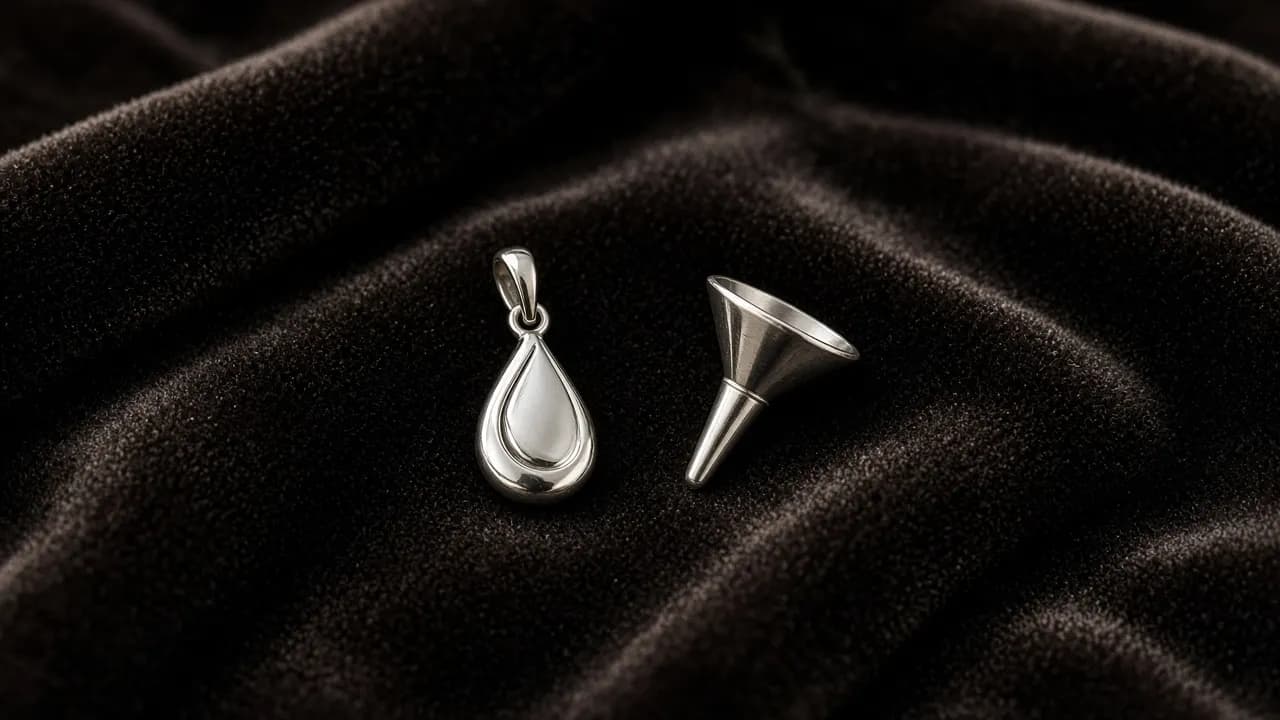
Jewelry ash capacity guide
How much ash fits in pendants, rings and glass, and how many pieces one pet can fill.
Limits and next steps
What the planner can't do, and where to go next
The planner uses typical volumes. A specific pendant might hold more or less, and memorial diamonds aren't included because labs vary so much in what they need. It also can't tell you how to physically divide ashes; for that, see our step-by-step jewelry filling guide.
When the plan's agreed, compare pieces on our jewelry options page, or add up the whole memorial with the memorial budget planner. If you'd like matching pieces sourced for the whole family, send us the plan. Families spread across several towns can check our local pages for how options differ in each area.

Reader polls
What would you choose?
Vote anonymously and see how other readers answered. The results are live counts from people who visit this site, so they show real opinions, not a scientific sample.
Would you get a piece for anyone else in the family?
Tap an answer to vote and see how others answered. Anonymous.
Do you keep more than one memorial for the same pet?
Tap an answer to vote and see how others answered. Anonymous.
Where are (or will be) your pet's ashes?
Tap an answer to vote and see how others answered. Anonymous.

Free tools to help you plan
Ashes sharing planner
Split ashes fairly between family members, keepsake urns and jewelry.
Jewelry ash capacity guide
How much ash fits in pendants, rings and glass, and how many pieces one pet can fill.
Memorial budget planner
Add up cremation, urn, keepsakes and a farewell so the total holds no surprises.
Questions people ask
Is it okay to divide a pet's ashes?
Yes. Dividing ashes between family members, jewelry and a main urn is common and there's no rule against it for pets. Many crematories will portion ashes for you if asked before they're returned. What matters is that everyone involved feels comfortable with the plan.
How do I physically divide ashes at home?
Work at a table over a tray lined with white paper, with small bags or containers ready and labeled. Use a clean spoon for keepsake portions and the tiny funnel or scoop supplied for jewelry. Open the inner bag gently and close it again as soon as you've finished.
Can ashes be mailed to family who live far away?
Within the US, cremated remains can be sent by the Postal Service using Priority Mail Express and its cremated-remains label. International rules vary and some countries restrict it. Often the simplest route is to mail an empty self-fill pendant and fill it before you send it, or carry a portion in person.
What if we change our minds after dividing the ashes?
Portions kept in sealed bags or keepsake urns can be recombined later. Jewelry that's been glued shut is harder to reverse, so fill pendants last, once everyone's settled. Keeping a small reserve also gives you room to make a new piece if someone changes their mind.


Sources and our estimates
- [1] Embrace notes cremated remains typically weigh about 3-5% of the pet's original body weight. Embrace Pet Insurance - Bury or Cremate Your Dog? Costs, Pros & Cons, 2025.
- [2] A median-weight giant-breed dog (48.8 kg / 108 lb) would be expected to return about 1.71 kg (3.8 lb) of cremated remains, needing an urn of about 108 cubic inches. Our estimate: 48.8 kg x 3.5% x 2.2046 lb/kg; urn = 108 lb x 1 cu in/lb. How we calculate.
- [3] Using the industry rule of thumb of 1 cubic inch of urn space per pound of body weight, a 12 lb cat needs an urn of about 12 cubic inches; a 70 lb dog needs about 70 cubic inches. Our estimate: urn cu in = body weight lb x 1 (industry rule of thumb, not a measured value). How we calculate.
- [4] 66.9% of respondents were surprised by how intense their grief was after losing a pet. RSPCA — Pet Loss Survey Results, 2026.
Get matching pieces for your family
Tell us what you need and where you are. We'll reply by email with clear options and prices so you can decide in your own time.